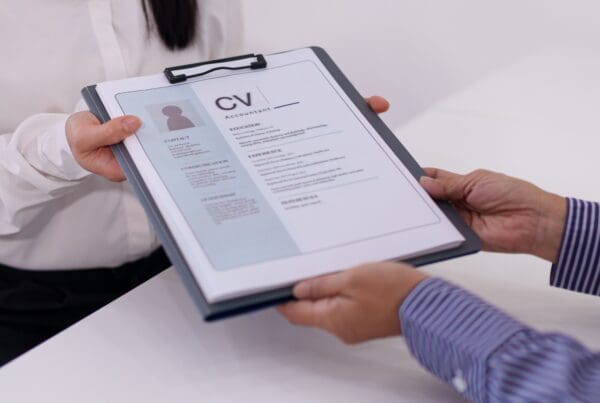
There are several reasons why skills-based hiring is gaining momentum.
Skills Shortages Continue
Many specialist sectors continue to face limited talent availability.
Waiting for someone who matches every requirement may simply not be realistic.
Organisations willing to consider candidates with adjacent skills often recruit more successfully.
Careers Are Becoming Less Linear
Career paths today look very different from those of ten years ago.
Professionals frequently move between industries, develop new technical skills and take on broader responsibilities throughout their careers.
Someone moving from manufacturing into engineering consultancy or from financial services into technology may bring valuable experience that isn’t immediately obvious from a job title alone.
Technology Is Changing Jobs Faster Than Ever
AI, automation and digital transformation continue to reshape roles.
Some technical skills become outdated surprisingly quickly.
Learning ability and adaptability are therefore becoming just as valuable as existing expertise.
Employers increasingly need people who can grow with the business.
How Skills-Based Hiring Benefits Employers
A well-implemented skills-based approach can deliver several advantages.
Access to a Larger Talent Pool
Removing unnecessary barriers allows employers to consider candidates from a wider range of backgrounds and industries.
This is particularly valuable in sectors experiencing persistent shortages.
Better Diversity of Thinking
People with different career experiences often bring fresh ideas and alternative perspectives.
Teams with varied backgrounds can improve innovation, collaboration and problem-solving.
Stronger Long-Term Potential
Some of the highest-performing employees are not necessarily those with the most experience.
They are the people who learn quickly, embrace challenges and continue developing throughout their careers.
Hiring for potential often produces stronger long-term results.
What Skills-Based Hiring Doesn’t Mean
There are some common misconceptions.
Skills-based hiring does not mean:
- Ignoring qualifications where they are legally required.
- Lowering recruitment standards.
- Hiring people who cannot perform the role.
Instead, it means carefully identifying which requirements are genuinely essential and which can be developed through training and experience.
The Role of Recruitment Partners
Identifying transferable skills isn’t always straightforward.
An experienced recruitment partner looks beyond keywords on a CV.
They assess:
- Career progression.
- Learning agility.
- Commercial awareness.
- Leadership capability.
- Communication style.
- Long-term potential.
This broader perspective often uncovers exceptional candidates who might otherwise be overlooked.
Building Better Job Descriptions
One of the easiest places to begin is with the job description itself.
Ask:
- Which skills are absolutely essential?
- Which can realistically be learned?
- Are we asking for qualifications that aren’t genuinely required?
- Are we focusing too heavily on previous job titles?
Small changes can significantly widen the available talent pool without compromising quality.
Skills Will Continue to Shape Recruitment
As technology continues to evolve and labour markets remain competitive, skills-based hiring is likely to become increasingly common.
The organisations that adapt will be better positioned to access wider talent pools, improve retention and build more adaptable workforces.
Rather than searching for someone who has done the exact same role before, successful employers will increasingly look for individuals who have the capability to succeed in the future.
How Bond Williams Can Help
At Bond Williams, we understand that successful recruitment isn’t about ticking boxes.
It’s about understanding people, recognising potential and matching the right skills with the right opportunities.
Our consultants work closely with employers to identify the capabilities that matter most, helping businesses attract talented professionals who can make a lasting impact.
Because sometimes the best candidate isn’t the one with the perfect CV.
It’s the one with the right skills, the right attitude and the potential to grow with your organisation.