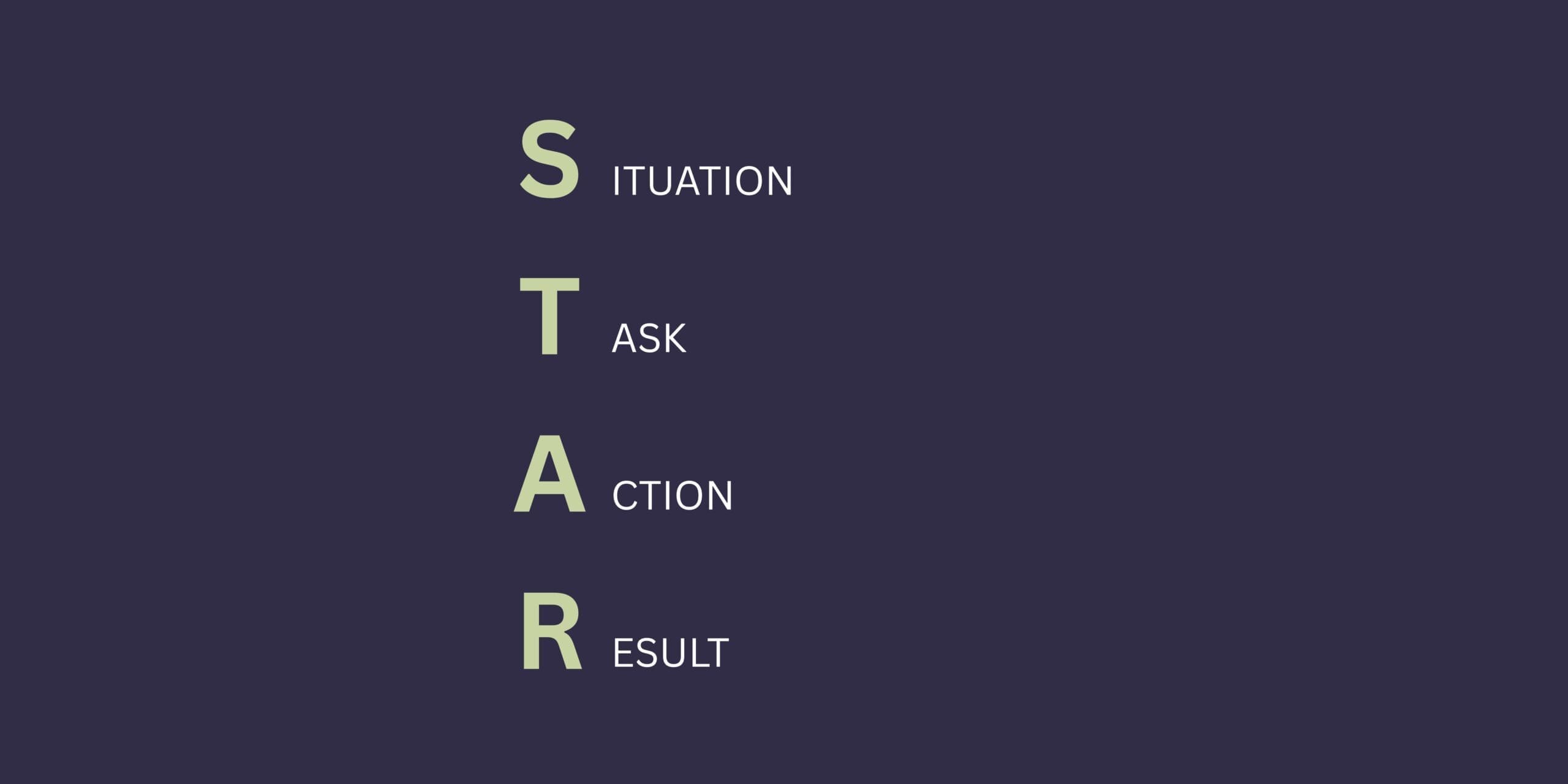
The STAR method is a proven framework for answering behavioural interview questions. By clearly outlining a Situation, Task, Action, and Result, you can provide concise, compelling answers that showcase your skills and experience. Here’s a detailed guide on how and when to use STAR, along with a handy checklist to ensure you cover all essential points.
When to Use the STAR Method
The STAR method is especially useful during:
- Job interviews
- Performance reviews
- Any scenario where you need to demonstrate problem-solving, leadership, or achievements
It works best for questions starting with phrases like:
- “Tell me about a time when…”
- “Give an example of…”
How to Use the STAR Method
- Situation – Describe the context or background of the task or challenge. Be specific to give a clear picture.
- Task – Explain your responsibility in that situation. What was expected of you?
- Action – Detail the steps you personally took to address the task or challenge. Focus on your contributions, not the team’s.
- Result – Share the outcome of your actions. Highlight successes, quantify results where possible, and reflect on what you learned.
STAR Checklist
Situation
- Provide an overview of the context.
- Explain your role and why you were chosen.
- Specify where and when it took place.
- Describe the desired outcome.
- Include an organisational chart if relevant.
Task
- Outline what you planned and how you approached it.
- Describe task prioritisation.
- Highlight required technical or professional skills.
- Note any new skills you needed and how you learned them.
- Mention tools or systems used.
- Provide a clear chronology of events.
Action
- Identify who was involved.
- Explain how you influenced others or were influenced.
- Describe difficult decisions and your approach.
- Address challenges with colleagues or management.
- Give examples of initiative or problem-solving.
- Note where compromise was necessary.
- Mention mentors and how they supported you.
Result
- State the outcome clearly.
- Reflect on lessons learned.
- Consider what you might do differently next time.
- Identify areas for improvement.
- Share what you enjoyed most and least, and why.
- Describe how others would characterise your actions.
- Mention recognition received or what you would have liked.
By following this checklist, you can ensure your responses are thorough, structured, and memorable. The STAR method not only helps you communicate your experience effectively but also demonstrates your ability to reflect, learn, and grow from past actions.